

Layering Flavor: How Building Depth Transforms Everyday Meals

Flavor is the secret ingredient that turns a simple dish into a memorable meal. But flavor doesn’t appear all at once—it’s built in layers, from the first aromatic sauté to the finishing touches on the plate. Understanding how to layer flavor can transform everyday ingredients into extraordinary dishes, inspiring creativity and confidence in the kitchen.
Start with Aromatics
The foundation of layered flavor often begins with aromatics: onions, garlic, shallots, leeks, or fresh herbs. Cooking these ingredients in oil or butter releases natural sugars and aromas, creating a sweet, savory base that infuses the entire dish. Take the time to gently sauté aromatics until they’re soft and golden; this first layer sets the stage for the depth of flavor to come.

Develop Layers with Seasoning
Seasoning in layers is key to achieving complexity. Add salt, spices, and dried herbs at different stages: a pinch early in cooking builds a base flavor, while fresh herbs, citrus zest, or finishing salts added at the end provide brightness and contrast. Experiment with complementary spices or try seasoning in stages to enhance natural flavors instead of masking them.

Deglazing and Sauces
When proteins or vegetables brown in a pan, they leave behind fond—the caramelized bits that hold concentrated flavor. Deglazing with a small amount of stock, wine, or vinegar lifts those bits and incorporates them into sauces or stews, adding richness and depth. This simple technique turns a skillet meal into something layered, complex, and restaurant-worthy.
Finishing Touches
The final layer of flavor often comes from finishing touches. Acid, fat, and fresh herbs balance richness and enhance taste. A drizzle of olive oil, a squeeze of lemon, or a sprinkle of fresh parsley or basil can brighten a dish and tie together all the flavors built throughout cooking. Even small additions at the end can make a big difference in overall flavor perception.
Why Cast Iron Helps
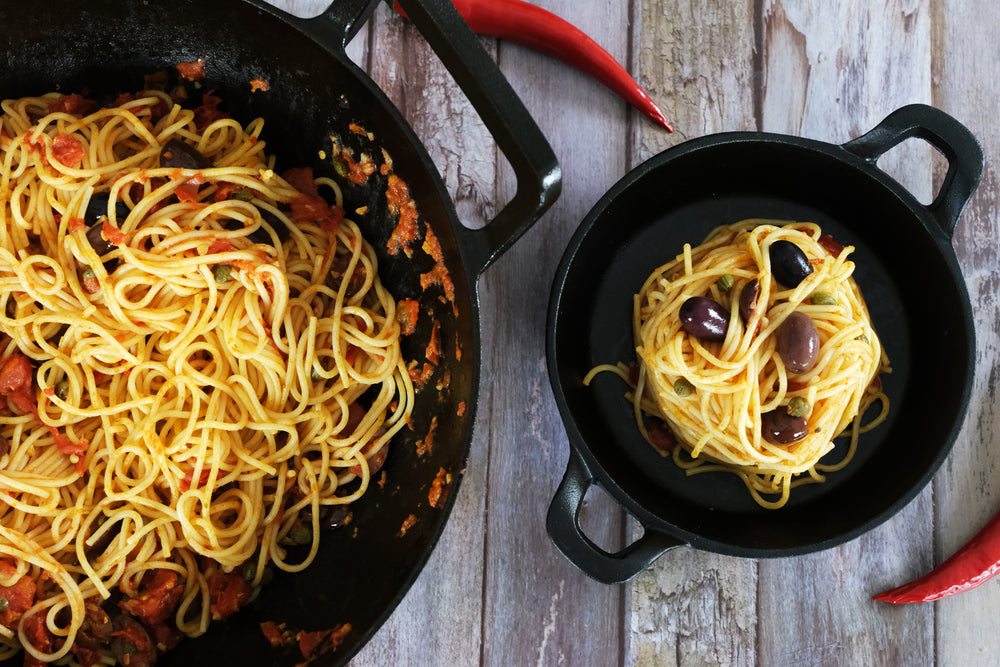
Cast iron is the ideal cookware for layering flavor. Its heat retention ensures even cooking of aromatics and proteins, while browning naturally creates fond for deglazing. Over time, a well-seasoned cast iron pan adds subtle depth that enhances every layer of flavor in your dishes. One skillet can take you from sautéing aromatics to searing proteins and finishing a rich sauce, keeping all the flavors interconnected.
Encouraging Experimentation
Layering flavor is also about creativity. Try new spice combinations, experiment with different sequences of adding ingredients, or pair contrasting herbs and citrus for excitement. Even a simple weeknight meal—like roasted vegetables with protein—can become extraordinary when you intentionally build flavors in stages.
Conclusion
Layering flavor transforms ordinary meals into memorable experiences. By starting with aromatics, seasoning thoughtfully, deglazing for richness, and finishing with brightness, you create dishes that are complex, satisfying, and truly enjoyable. Explore the art of layering in your own kitchen, experiment with ingredients, and discover how this technique can elevate everyday cooking.


Laisser un commentaire