

The Flavor Boost: How Toasting and Searing Can Transform Everyday Ingredients

When it comes to creating bold, memorable flavors, sometimes the smallest techniques make the biggest difference. Toasting spices, nuts, and grains—or searing vegetables and proteins—can turn ordinary ingredients into something extraordinary. These simple steps unlock aromas, deepen flavors, and elevate everyday meals without adding complicated steps or extra ingredients.
Toasting Ingredients
Toasting is a powerful way to bring out the natural richness of ingredients.
-
Spices: Gently toasting spices in a dry pan releases their essential oils, intensifying aroma and flavor. Try this with cumin, coriander, or sesame seeds before adding them to soups, sauces, or marinades.
-
Nuts and seeds: Toasting almonds, pecans, or pumpkin seeds enhances their natural sweetness and crunch, perfect for salads, granola, or baked goods.
-
Grains: Even rice, quinoa, or oats develop a nuttier, more complex flavor when lightly toasted before cooking. This simple step can turn a basic side dish into a flavor-packed component of your meal.

Searing Proteins and Vegetables
Searing isn’t just for steaks or chops—it works wonders for vegetables, tofu, and even fruits. High heat creates a rich, caramelized crust that locks in moisture and adds depth to the flavor profile. Sear carrots, cauliflower, mushrooms, or zucchini before roasting to amplify their natural sweetness. For proteins, a golden-brown crust enhances texture while preserving juiciness inside.

Why Cast Iron Works Best
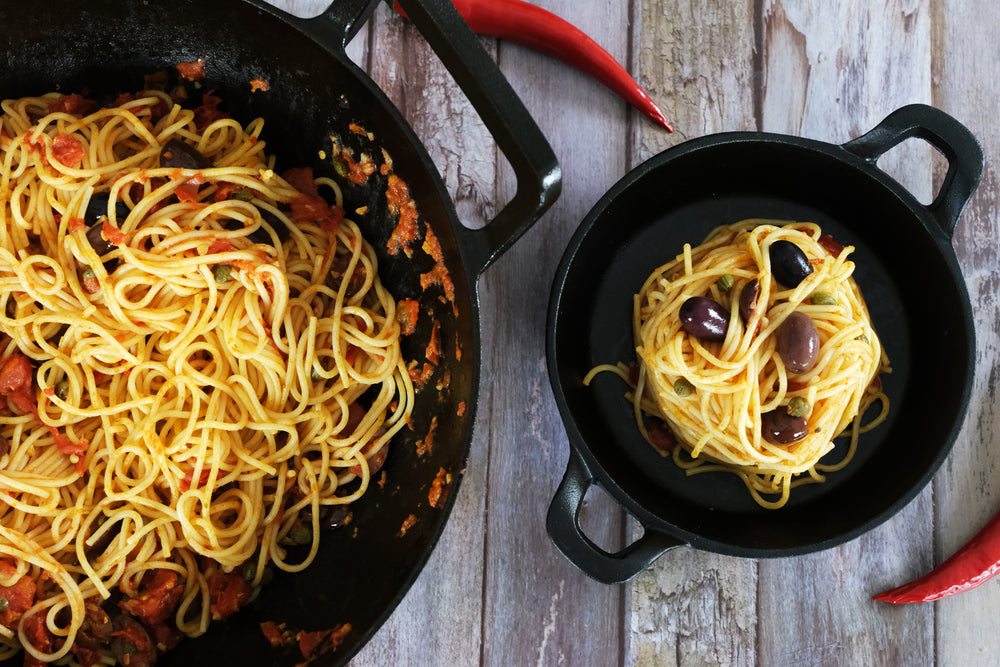
Cast iron cookware is ideal for both toasting and searing. Its exceptional heat retention ensures even cooking, creating consistent browning across spices, nuts, grains, vegetables, and proteins. Over time, a well-seasoned cast iron pan also adds subtle layers of flavor to every dish, enriching the results further.
Practical Tips
-
Avoid overcrowding: Give ingredients space so they brown evenly rather than steam.
-
Stir or flip: Move items regularly to ensure uniform toasting or searing.
-
Preheat your pan: A hot surface is essential for maximum flavor development.
-
Adjust heat: Keep an eye on your pan—ingredients can burn quickly once toasted or seared.
Creative Applications
-
Spices: Toast before grinding or adding to dishes for extra fragrance.
-
Vegetables: Sear before roasting to amplify sweetness and caramelization.
-
Fruits: Try pan-seared peaches or apples for desserts or salads.
-
Grains and legumes: Toast before cooking to add a nutty undertone to pilafs or stews.


Conclusion
Toasting and searing are simple yet transformative techniques that unlock layers of flavor in everyday ingredients. By experimenting with these methods, you can elevate ordinary meals into extraordinary experiences. Next time you cook, try toasting a handful of spices, searing your vegetables, or browning grains before cooking—you may discover new depths of flavor that inspire creativity in your kitchen.


Laisser un commentaire