

Cooking with Acid in Cast Iron: What You Can (and Can't) Do

Tomato sauces, wine, citrus, seasoning myths, and best practices.
Cast iron cookware is prized for its exceptional heat retention, durability, and ability to develop a naturally non-stick cooking surface over time. Yet one question continues to spark debate among home cooks:
Can you cook acidic foods in cast iron?
Some people believe that tomatoes, wine, vinegar, and citrus will instantly ruin a cast iron pan, while others cook acidic dishes without giving it a second thought. The truth lies somewhere in between.
A well-seasoned cast iron pan is remarkably durable and can handle many acidic ingredients in everyday cooking. However, understanding how acid interacts with cast iron will help you know when it's perfectly safe—and when another type of cookware might be a better choice.
Why Does Acid Affect Cast Iron?
Cast iron is protected by a layer known as seasoning. This isn't seasoning in the culinary sense, but a hard coating created when thin layers of oil are heated until they polymerize and bond to the iron.
This protective layer:
- Helps prevent rust
- Improves food release
- Protects the metal from moisture
- Reduces direct contact between acidic foods and the iron
Acidic ingredients can slowly break down this protective coating, especially during long cooking times. If the seasoning is thin or worn, the acid may begin reacting directly with the iron beneath.
What Happens When Acid Reacts with Cast Iron?
When acidic foods remain in contact with traditional cast iron for extended periods, several things may occur:
- The seasoning may gradually wear away.
- Small amounts of iron can transfer into the food.
- Delicate sauces may develop a slight metallic taste.
- The cooking surface may become dull and require re-seasoning.
Fortunately, these effects are rarely permanent. A quick cleaning and light seasoning are usually enough to restore the pan.
Can You Cook Tomato Sauce in Cast Iron?
The answer is yes—but moderation matters.
Tomatoes have a naturally acidic pH, but that doesn't mean every tomato-based recipe should stay out of your cast iron skillet.
Short Cooking Times
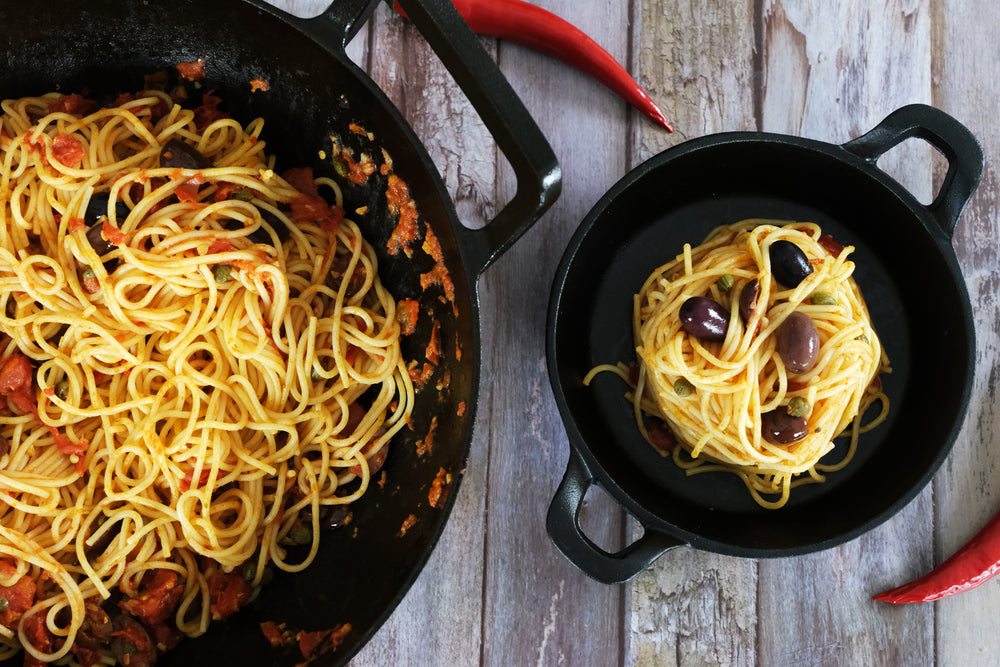
Recipes like shakshuka, pasta sauces, roasted tomatoes, or tomato-based stews that cook for 15–30 minutes are generally perfectly safe in a well-seasoned cast iron pan.
Long Simmering
If you're making a slow-cooked pasta sauce or simmering tomatoes for several hours, the acid has more time to break down the seasoning. For these recipes, enameled cast iron or stainless steel is usually a better option.
Is It Safe to Deglaze with Wine?
Yes.
Deglazing is a common cooking technique that involves adding wine to a hot pan to dissolve the flavorful browned bits left behind after searing.
Because the wine typically reduces within a few minutes, it rarely causes any noticeable damage to a well-seasoned cast iron pan.
Short Wine Sauces
Quick reductions and pan sauces are perfectly suitable for traditional cast iron.
Long Wine Braises
Recipes that simmer in wine for several hours are better prepared in enameled cast iron.

What About Lemon Juice and Citrus?
Lemon juice, lime juice, and other citrus fruits are more acidic than tomatoes, but the amount used in most recipes is relatively small.
Finishing a Dish
Adding fresh lemon juice to grilled vegetables, seafood, or chicken cooked in cast iron is completely fine.
Extended Cooking
Recipes built around citrus-based sauces or marinades that cook for long periods are better suited to enameled cookware.
Can You Cook with Vinegar?
Vinegar is among the most acidic ingredients commonly used in cooking.
A splash added to a pan sauce or dressing isn't a problem. However, recipes containing large amounts of vinegar that simmer for extended periods may wear away the seasoning more quickly.
Interestingly, vinegar is also used to remove rust from cast iron—a good reminder of its strength when left in prolonged contact with bare iron.
Does Acid Make Food Taste Metallic?
Sometimes—but only under certain conditions.
A pan with strong seasoning provides an effective barrier between the food and the iron. If the seasoning is worn or incomplete, acidic ingredients may dissolve tiny amounts of iron, giving delicate sauces a slightly metallic flavor.
Maintaining good seasoning greatly reduces this possibility.
Does Acid Ruin the Seasoning?
Not usually.
One of the biggest myths surrounding cast iron is that a single tomato sauce will strip the pan bare.
In reality, seasoning wears away gradually over time. Occasional acidic cooking is unlikely to cause noticeable damage, especially if the cookware is well seasoned.
Regular cooking with oils and fats naturally helps rebuild and strengthen the seasoning layer.
Seasoned Cast Iron vs. Enameled Cast Iron
Both types of cookware have their strengths.
Traditional Seasoned Cast Iron
- Naturally non-stick after seasoning
- Excellent for frying, searing, roasting, and baking
- Develops character with use
- Requires occasional maintenance
Enameled Cast Iron
- No seasoning required
- Non-reactive surface
- Ideal for tomato sauces, wine reductions, citrus dishes, and long braises
- Easy to clean
If you frequently cook highly acidic recipes that simmer for hours, enameled cast iron is the more practical choice.
Common Myths About Acid and Cast Iron
Myth: Tomatoes should never touch cast iron.
Reality: Short tomato-based recipes are generally safe in a well-seasoned pan.
Myth: Wine destroys cast iron.
Reality: Deglazing with wine is standard practice in professional kitchens and poses little risk during short cooking times.
Myth: Acid permanently ruins seasoning.
Reality: Seasoning naturally wears and rebuilds over time. Minor wear is easy to restore.
Myth: Cooking acidic foods in cast iron is unsafe.
Reality: For most healthy people, the small amount of iron that may transfer into food is considered safe and may even contribute to dietary iron intake.

Best Practices for Cooking Acidic Foods in Cast Iron
Maintain Good Seasoning
A well-seasoned pan provides the best protection against acidic ingredients.
Avoid Long Simmering
Quick cooking is generally fine. Reserve long, slow acidic recipes for enameled cast iron.
Don't Store Food in the Pan
After cooking, transfer leftovers to another container. Prolonged contact between acidic foods and cast iron can gradually weaken the seasoning.
Clean and Dry Promptly
Wash the pan, dry it thoroughly, and apply a very thin coat of oil before storing.
Re-season When Necessary
If the surface begins to look dull or food starts sticking, a quick seasoning session will restore the protective coating.
The Worst-Case Scenario
One of the biggest misconceptions is that cooking acidic foods permanently damages cast iron. In reality, the worst thing that is likely to happen is that some of the pan's seasoning wears away, particularly after cooking highly acidic dishes for an extended period. The cast iron itself is not ruined. If the seasoning becomes thin or patchy, simply clean the pan and apply a fresh layer of seasoning. Re-seasoning cast iron is a straightforward process that can be repeated as often as needed, allowing the cookware to perform like new again.
Frequently Asked Questions
Can I make chili in cast iron?
Yes. Chili cooked for an hour or less is generally fine. For recipes that simmer all afternoon, enameled cast iron is a better option.
Can I cook curry?
Most curries work well in cast iron. Tomato-heavy curries that cook for several hours are better suited to enameled cookware.
Can I make pasta sauce?
Absolutely. Quick pasta sauces are perfectly suitable for seasoned cast iron, while long-simmered sauces are better prepared in enameled cast iron or stainless steel.
Does cooking in cast iron add iron to food?
Yes, small amounts of iron can transfer into food, particularly when cooking acidic ingredients. For most people, this is perfectly safe and may even increase dietary iron intake.

Final Thoughts
The belief that acidic foods should never be cooked in cast iron cookware is one of the most persistent myths in the kitchen.
The reality is much simpler: a well-seasoned cast iron pan can comfortably handle everyday recipes containing tomatoes, wine, vinegar, or citrus, provided they aren't simmered for extended periods.
For quick sauces, pan reductions, shakshuka, roasted vegetables, or a splash of wine to deglaze after searing, traditional cast iron performs exceptionally well while delivering the outstanding heat retention and browning that make it a favorite among cooks.
When a recipe calls for hours of simmering in highly acidic liquids, enameled cast iron is often the better choice because its glass-like coating won't react with the food.
Understanding when—and how—to cook acidic ingredients in cast iron allows you to enjoy the strengths of this timeless cookware while keeping it beautifully seasoned for many years to come.


Ostavite komentar